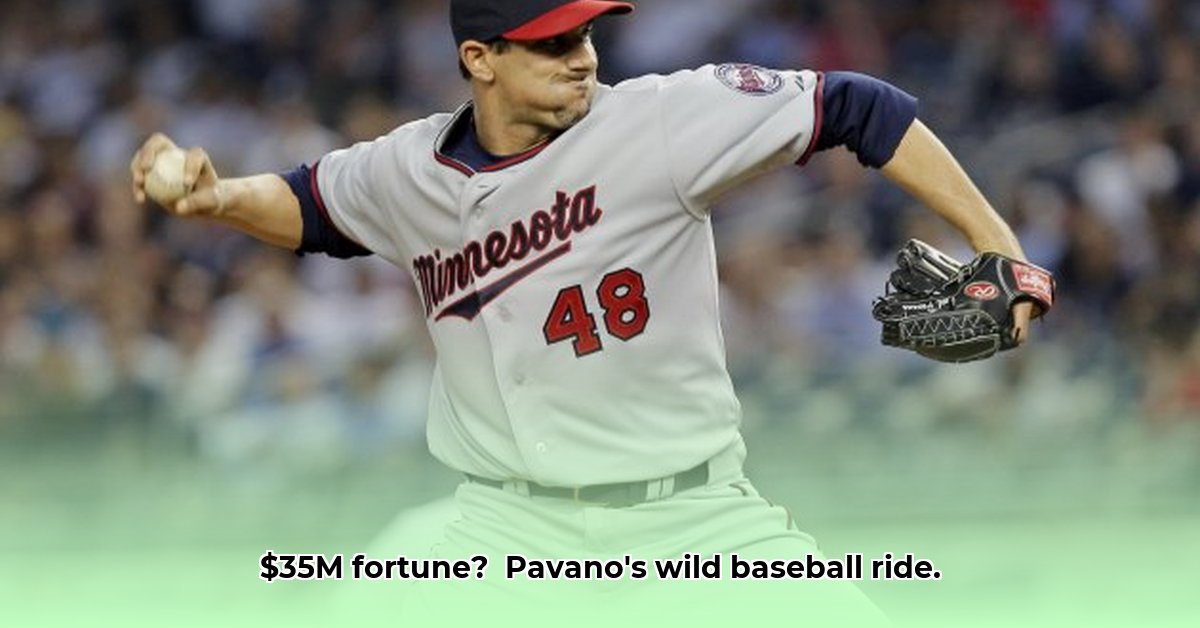
Carl Pavano's baseball career is a compelling narrative of soaring potential, devastating injuries, and ultimately, a significant financial windfall. It's a story that transcends the simple accumulation of wealth, offering a nuanced look at the unpredictable nature of professional sports, the fragility of athletic careers, and the complex interplay between performance, injuries, and lucrative contracts. His journey, from promising young pitcher to injury-plagued Yankee, and finally to a surprisingly comfortable retirement, reveals valuable insights into the business of baseball and the human cost of ambition.
From Minor League Star to Major League Millions
Pavano's early career was a testament to his talent. His rapid ascent through the minor leagues culminated in a World Series title with the Florida Marlins in 2003, followed by an All-Star appearance in 2004. This trajectory suggested a future filled with accolades and substantial earnings. His impressive performance set the stage for a life-changing contract. But the path to financial security was far from straightforward.
The New York Yankees and the Unfolding Drama
In 2005, Pavano signed a four-year, $39.95 million contract with the New York Yankees—a deal that catapulted him into the upper echelons of baseball's financial elite. However, this marked a turning point. Instead of becoming a Yankee legend, Pavano faced a relentless barrage of injuries. Shoulder problems, a bruised hip, broken ribs—the list was extensive. These setbacks dramatically curtailed his on-field performance, transforming his narrative from one of rising success to a cautionary tale about the uncertainty inherent in professional athletics. Did bad luck solely define his Yankee years, or were other factors at play? The answer is likely more nuanced.
Average Performance, Extraordinary Payday
Despite never fully living up to the expectations set by his hefty contract, Pavano accumulated an estimated net worth of $35 million. His career statistics—a 4.39 ERA (Earned Run Average) and 1.34 WHIP (Walks plus Hits per Inning Pitched)—indicate a player who performed around league average. His win-loss record (108-107) further illustrates a career of modest success, yet his financial success significantly outweighed his on-field achievements. The immense salary he received from the Yankees, despite the injuries, ensured considerable financial security.
The Sinkerball and its Impact: A Complex Question
Pavano's signature pitch, the sinkerball (a pitch designed to induce ground balls), may have played an unexpected role in his injury woes. The repetitive stress from throwing this pitch, along with the inherent physical demands of professional baseball, might have contributed to his physical problems. While the exact correlation remains uncertain and requires further investigation, it is undeniable that the cumulative stress significantly impacted his career. Did this pitching style contribute to his injuries? The question warrants further research and should be analyzed against his overall career performance.
Key Takeaways from Carl Pavano's Career:
- Injury's Impact: Devastating injuries significantly impacted Pavano's on-field performance, highlighting the vulnerability of athletes to career-altering setbacks.
- Contract vs. Performance: A massive contract guaranteed financial security even in the face of diminished performance, showcasing a disparity between earning potential and on-field execution.
- The Sinkerball's Role: Pavano's reliance on a sinkerball may have inadvertently increased his injury risk, underscoring how specific pitching styles can impact an athlete's career longevity.
Pavano's story stands as a testament to the unpredictable nature of professional athletics. It is a reminder that financial success in sports doesn't always correlate with consistent on-field dominance. His journey highlights the crucial roles of injury, contract negotiations, and the human element in shaping a player's career arc.